Turtle Keeping Guide: Introduction to Turtle Habits
 YOUYOU
Turtles are gentle in nature, with beautiful shell patterns, and are very quiet. They also symbolize good fortune and longevity, and are believed to bring prosperity and good fortune to the home. Many people admire the turtle's unhurried and contented demeanor. This article compiles information about turtle habits; feel free to learn more if you're interested.
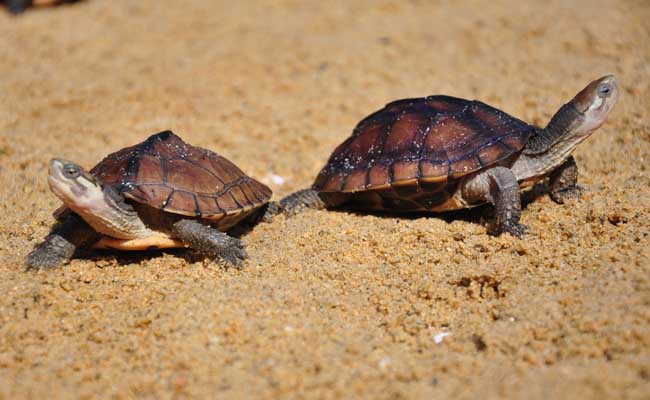
1. Turtles are omnivorous. In the wild, they usually eat small fish and occasionally some aquatic plants. Larger turtles, such as alligator snapping turtles, sometimes even eat ducks. Giant tortoises living in the Galapagos Islands mainly feed on their paws.
2. There's a reason why turtles have rounded shells. Experiments have shown that a rounded object of the same volume can withstand twice the weight of other objects. For this reason, turtle shells have remained largely unchanged since the age of dinosaurs.
3. The Gender of baby turtles is determined by the temperature. If the incubation temperature is above 36.5 degrees Celsius but below 36.5 degrees Celsius, the turtles are usually male. Therefore, if some eggs in a clutch receive more sunlight, the female turtles will be female; while those at the bottom receiving less sunlight will be male.
4. Turtles also hibernate in warmer climates, but because the weather is warmer there, their hibernation isn't necessarily all sleeping; they simply eat and move less.
5. Turtles are cold-blooded animals, so they enjoy basking in the sun. Sunlight helps them maintain a certain temperature to aid digestion and increases their vitamin E levels, eliminating some microorganisms on their shells.
6. Distinguishing males from females. First, look at the plastron (ventral carapace). The male's plastron is concave, while the female's is flat. Second, look at the carapace. The male's plastron is on the outside of the carapace, while the female's is on the inside.
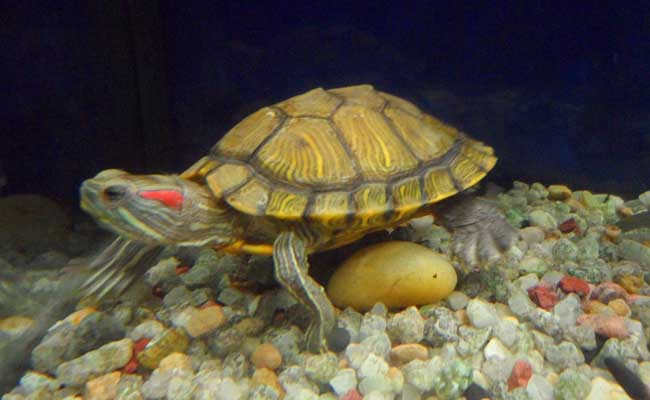
Turtles' Habits: Turtles have a varied diet and are semi-aquatic, semi-terrestrial reptiles. They mainly inhabit rivers, lakes, reservoirs, ponds, and other bodies of water. During the day, they mostly stay in the water, and in the hot summer, they gather in groups to find shady spots. They are gentle in nature and do not fight with each other. When encountering enemies or frightened, they retract their head, limbs, and tail into their shells.
Turtles' Lifespan: Turtles have a long lifespan. The exact lifespan of turtles is currently unknown, but it is generally said that they can live up to 100 years. Some studies suggest they can live over 300 years, and some even over 1000 years.
Turtles' Habits: Slow Growth. Turtles grow relatively slowly. Under normal conditions, the growth rate of female turtles is as follows: one-year-old turtles weigh around 15 grams, two-year-old turtles 50 grams, three-year-old turtles 100 grams, four-year-old turtles 200 grams, five-year-old turtles 250-250 grams, and six-year-old turtles around 400 grams. Male turtles grow slowly, and the largest sexually mature individuals generally weigh less than 250 grams.
Turtles' Habits: Strong Endurance to Starvation. Turtles have a strong endurance to starvation; they are not easily killed even after several months without food. They also have strong disease resistance and a high survival rate.
Do you understand turtles' habits now?