How to understand the inner state of cats
Cats are not like humans, they can express their emotions through language and facial expressions. Although cats also have cat language, there are probably not many people who can understand it. Therefore, we need to guess the inner world of cats through their movements. What emotions do cats' different body language represent?
Most cat owners know that cats will wave their tails to demonstrate when they are unhappy, and meow softly when they are satisfied. This is the most basic way for cats to express emotions. At times, cats will curl up on their owners' knees and occasionally blink or close their eyes, creating a state of the cat asking for a kiss from its owner. This can also be interpreted as: 'I feel safe, I trust you'. If the cat owner responds with a smile and a blink, the cat is likely to also blink in response. It is strange that some cats can also be hypnotized at this time, while scratching their owner's legs or arms with their claws. Although it is difficult for the owner to resist, this is a way for cats to express affection and satisfaction.
Cats also hide their claws and lightly tap their owners to attract their attention and play with them. But cats only show their claws and pounce when defending or commanding. Some cats even jump onto the head of their owner's bed and gently pat them to wake them up when they wake up in the morning.
How to understand the inner state of cats
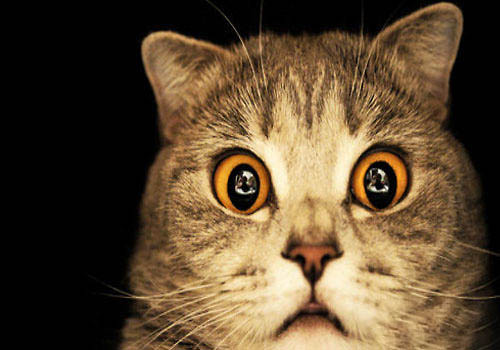
Cats have rich and vivid body language
Cats and dogs are sometimes the same, and when their owners come home, dogs usually welcome them by jumping, barking, and wagging their tails. Cats will greet each other with the sound of "meow meow", just like how people greet each other with "hello". Cats also make a "meow meow" sound when begging for food, but if you pay attention, you will find that the two sounds are not exactly the same. In addition, when the owner returns home, the cat will rub the owner's legs, shake its body, and raise its tail, as if waving a welcome flag.
If criticized by its owner, the cat will wag its tail, stretch its legs, and walk away with arrogant steps. This disdainful expression is usually only revealed by people.
Combing hair is a daily compulsory course for cats, but it can also express contempt. So we often see cats and dogs maintaining a considerable distance, dressing up on their own, with a lofty expression.
Cats sometimes experience sudden nervous tension, and the simplest way to determine if a cat is mentally stressed is to look at the direction of its ears. When the ears are facing backwards all day, the cat must be extremely nervous. In addition, if a cat barks inexplicably, emits fierce light in its eyes, bites something, or adopts a fighting posture, it may also be due to mental tension. Previously, I used to go to the bathroom in a very orderly manner. Now, suddenly urinating and defecating in the house, excessive grooming leading to hair loss, and severe hairball disease are all caused by mental stress. In addition, mental stress is also manifested as various symptoms such as diarrhea, constipation, scratches, and bites. If we want to have a detailed understanding of the level of mental stress in cats, we only need to go to the hospital for a blood test and check the number of lymphocytes to understand.
Of course, cats also have a lot of body language, and their different postures and expressions are also one of the reasons why we love them. To understand what cats are really saying to us, cat owners need to observe more in their daily lives.